Rancang Bangun Prototipe Sistem Pengusir Burung Cerdas (Smart Bird Deterrent) di Area Airside Bandara Internasional I Gusti Ngurah Rai, Kabupaten Badung, Bali
DOI:
https://doi.org/10.24843/MITE.2026.v25.01.p14Keywords:
Bird Strike; Closed-loop; Computer Vision; Edge AI; OpenVINO; YOLOv8.Abstract
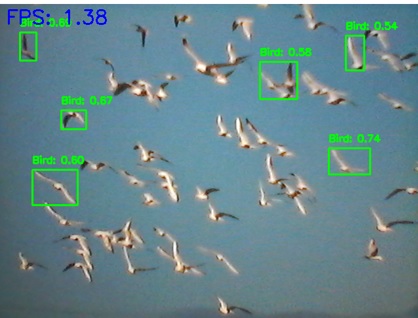
Bird strike incidents in airport airside areas pose a high-risk safety threat. Current conventional mitigation efforts rely on open-loop acoustic alarm devices that operate continuously for 24 hours. This method causes massive electrical energy waste and triggers habituation phenomena in target wildlife. This research aims to design a smart bird deterrent system prototype based on artificial intelligence utilizing a closed-loop control architecture. The methodology integrates the YOLOv8 Nano computer vision algorithm as a visual feedback sensor unit, deployed on low-end Edge AI computing (Intel Celeron N3350). To prevent CPU computational bottlenecks, the model is optimized into an Intermediate Representation format using Intel OpenVINO. The audio actuator trigger signal is strictly executed only when the bird detection accuracy exceeds a 0.5 confidence threshold. Test results indicate that the algorithm dynamically responds to wildlife presence, precisely halting audio emissions when the area is clear, effectively solving the habituation problem. The OpenVINO framework optimization successfully accelerated the image processing computational rate from 0.80 FPS to a stable 1.30 FPS. The system proved reliable with a 0.77-second response latency, offering an innovative control engineering output for energy efficiency in aviation facilities.
Downloads
References
F. Di Caprio, A. Sellitto, S. Saputo, M. Guida, and A. Riccio, “A sensitivity analysis of the damage behavior of a leading-edge subject to bird strike,” Applied Sciences, vol. 10, no. 22, Nov. 2020, doi: 10.3390/app10228187.
Z. U. Rehman, A. Ghafar, A. Syed, A. Tayab, and M. G. Rabbi, “An Optimized YOLOv8-based Method for Airport Bird Detection: Incorporating ECA Attention, MBC3 Module, and SF-PAN for Improved Accuracy and Speed,” International Journal of Intelligent Systems and Applications, vol. 17, no. 2, pp. 1–13, Apr. 2025, doi: 10.5815/ijisa.2025.02.01.
A. Vuilliomenet, K. E. Jones, and D. Wilson, “Future of Edge AI in biodiversity monitoring,” pp. 1–41, Feb. 2026, [Online]. Available: http://arxiv.org/abs/2602.13496
D. Adami, M. O. Ojo, and S. Giordano, “Design, Development and Evaluation of an Intelligent Animal Repelling System for Crop Protection Based on Embedded Edge-AI,” IEEE Access, vol. 9, pp. 132125–132139, Sep. 2021, doi: 10.1109/ACCESS.2021.3114503.
H. Sun, Y. Wang, J. Du, and R. Wang, “MFE-YOLO: A Multi-feature Fusion Algorithm for Airport Bird Detection,” ICCK Transactions on Intelligent Systematics, vol. 2, no. 2, pp. 85–94, May 2025, doi: 10.62762/tis.2025.323887.
J. Ma, J. Guo, X. Zheng, and C. Fang, “An Improved Bird Detection Method Using Surveillance Videos from Poyang Lake Based on YOLOv8,” Animals, vol. 14, no. 23, Nov. 2024, doi: 10.3390/ani14233353.
A. F. Félix-Jiménez, V. S. Sánchez-Lee, H. A. Acuña-Cid, I. Ibarra-Belmonte, E. Arredondo-Morales, and E. Ahumada-Tello, “Integration of YOLOv8 Small and MobileNet V3 Large for Efficient Bird Detection and Classification on Mobile Devices,” AI, vol. 6, no. 3, Mar. 2025, doi: 10.3390/ai6030057.
A. Kh Al-Zihairy, A. E. Abdelkareem, and C. Author, “ENHANCED YOLOV8 FOR EDGE COMPUTING: A DEEP LEARNING APPROACH FOR MEMORY OPTIMIZATION,” Iraqi Journal of Information and Communications Technology(sss), vol. 8, no. 1, pp. 23–37, Apr. 2025, doi: 10.31987/ijict.8.1.283.
I. Nurkarima, H. Priyatman, and B. Kurniawan, “PEMODELAN SISTEM LEVEL AIR HEAD TANK MENGGUNAKAN PENGENDALI PID PADA PEMBANGKIT LISTRIK TENAGA MINI HIDRO MERASAP.”
R. C. Beason, “What Can Birds Hear?,” Proceedings of the 21st Vertebrate Pest Conference, vol. 21, pp. 92–96, 2004.
P. E. Schlichting et al., “Efficacy of an acoustic hailing device as an avian dispersal tool,” Wildl. Soc. Bull., vol. 41, no. 3, pp. 453–460, Sep. 2017, doi: 10.1002/wsb.797.
J. I. Ramirez et al., “Applied ecology of fear: A meta-analysis on the potential of facilitating human-wildlife coexistence through nonlethal tools,” Ecological Solutions and Evidence, vol. 5, no. 2, Mar. 2024, doi: 10.1002/2688-8319.12322.
C. H. Rankin et al., “Habituation revisited: An updated and revised description of the behavioral characteristics of habituation,” Neurobiol. Learn. Mem., vol. 92, no. 2, pp. 135–138, Sep. 2009, doi: 10.1016/j.nlm.2008.09.012.
Q. Chen et al., “An experimental study of acoustic bird repellents for reducing bird encroachment in pear orchards,” Front. Plant Sci., vol. 15, Sep. 2024, doi: 10.3389/fpls.2024.1365275.
J. Redmon, S. Divvala, R. Girshick, and A. Farhadi, “You Only Look Once: Unified, Real-Time Object Detection.” [Online]. Available: http://pjreddie.com/yolo/
Y. Chen and H. Watanabe, “OPTIMIZING YOLOV8N FOR ENHANCED PRECISION IN SMALL OBJECT DETECTION ON CUSTOM DATASETS,” European Journal of Emerging Data Science and Machine Learning, vol. 1, no. 1, pp. 63–80, Dec. 2024.
C. G. Raju, A. Devarapalli, R. Mahendran, S. Madhusudan, and O. Prasad, “Optimizing YOLOv8: OpenVINO standard quantization vs accuracy-controlled for edge deployment,” Indonesian Journal of Electrical Engineering and Computer Science, vol. 40, no. 3, pp. 1567–1575, Dec. 2025, doi: 10.11591/ijeecs.v40.i3.pp1567-1575.
Intel Corporation, “Conventional AI Workflow,” OpenVINOTM Documentation. Accessed: Jun. 16, 2026. [Online]. Available: https://docs.openvino.ai/2026/openvino-workflow.html
Ultralytics, “Brief summary of YOLOv8 model structure,” GitHub (ultralytics/ultralytics). Accessed: Jun. 16, 2026. [Online]. Available: https://github.com/ultralytics/ultralytics/issues/189
O. Shalash et al., “Benchmarking YOLOv8–YOLOv12 for Real-Time Object Detection on Single-Board Computers,” Preprints.org, May 2026, doi: 10.20944/preprints202605.0936.v1.
Y. H. Hsieh, C. C. Kao, C. H. Lai, K. P. Lin, S. Y. Yang, and S. M. Yuan, “Low-FPS Multi-Object Multi-Camera Tracking via Deep Learning,” Electronics (Basel)., vol. 14, no. 7, Apr. 2025, doi: 10.3390/electronics14071373.
Downloads
Published
Issue
Section
License
Copyright (c) 2026 I Kadek Rika Artawan, Lie Jasa (Author)

This work is licensed under a Creative Commons Attribution 4.0 International License.
Jurnal MITE 1 (Majalah Ilmiah Teknologi Elektro) Universitas Udayana menggunakan lisensi akses terbuka Creative Commons Attribution 4.0 International (CC BY 4.0 International).