Beta Wave Responses in T3 and T4 EEG Channels to Product Packaging Visualization in Neuromarketing
DOI:
https://doi.org/10.24843/MITE.2026.v25.01.p08Keywords:
EEG; Kemasan; Neuromarketing; PSD; Sinyal OtakAbstract
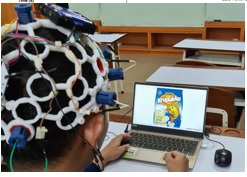
Abstract— Conventional marketing research often suffers from bias. While neuromarketing offers a solution using Electroencephalography (EEG), existing studies typically evaluate product packaging as a holistic stimulus and have not yet unraveled the neural processes behind each design element. This study aims to analyze the functional asymmetry of the temporal lobes (channels T3 and T4) and the involvement of Beta waves 12–30 Hz when consumers evaluate packaging. Using an Ultracortex Mark IV headset, brain activity from 25 participants was recorded while viewing packaging images categorized as "attractive" or "unattractive," which were validated through an initial questionnaire of 60 respondents. Data were extracted using the Python-based Power Spectral Density (PSD) method. The quantitative results showed that attractive packaging consistently triggered the highest surge in average Beta-band PSD across both channels. A clear functional asymmetry emerged through the dominance of the T4 channel (Right Temporal), which reached 0.251 μV2/Hz as the right brain processes non-verbal information, aesthetics, colors, logos, and graphic layouts. Concurrently, the T3 channel (Left Temporal) was active at 0.201 μV2/Hz to support logical-verbal processing when digesting textual product information. The output of this study proves that attractive packaging increases the reconstruction of spatial visualization in the consumer's mind through a recurrent feedback mechanism before a decision is made.
Downloads
References
[1] G. I. P. Kusuma, “Analisis Stimulus Desain Kemasan Menggunakan Metode Eye Tracking Dan Ekspresi Wajah,” 2021, UNIVERSITAS ATMA JAYA YOGYAKARTA.
[2] G. N. I. Burhanuddin, “Prefrensi Konsumen Terhadap Sajian Kopi Peach Americano Melalui Neuromarkrting Pada Kelompok Usia Lansia Awal (Studi Kasus : Cafe di Kota Makassar),” 2023, Universitas Hasanuddin.
[3] M. Edu, A. Adam, dan G. I. Rumambi, “Pengaruh Neuromarketing Dan Daya Tarik Iklan Terhadap Keputusan Pembelian Produk Coca Cola Melalui Emosi Konsumen Sebagaivariabel Intervening (Studi Kasus Kota Tomohon),” Jurnal EHO, vol. 5, no. 2, hlm. 7–17, 2025.
[4] Z. Khakim dan S. Kusrohmaniah, “Dasar-Dasar Electroencephalography (EEG) bagi Riset Psikologi The Basics of Electroencephalography (EEG) for Psychological Research,” Buletin Psikologi, vol. 29, no. 1, hlm. 92–115, 2021.
[5] E. C. L. B. Elchy Citra Lestari Basri, “Daya Tarik Produk Kemasan Pastry Mania. C. Plain Place Terhadap Brand Awareness,” 2024.
[6] L. Pramudya dan N. I. ER, “Evaluasi Implementasi Komponen Smart City di Bali: Literature Review,” Majalah Ilmiah Teknologi Elektro, vol. 24, no. 1, hlm. 9–22, 2025.
[7] F. Zebua, T. H. S. Hulu, D. Lase, dan E. Baene, “Inovasi desain kemasan dodol durian Nias sebagai strategi peningkatan daya tarik dan penjualan di UD Tanda Setia Gunungsitoli,” Management Perspective: Jurnal Penelitian Manajemen, vol. 2, no. 2, hlm. 80–97, 2025.
[8] Y. A. Ilksoy, A. de la Fuente, J. D. Sitt, E. Tagliazucchi, dan C. Pallavicini, “Investigating the role of beta and gamma tACS in visual processing and conscious perception,” Neurosci. Conscious., vol. 2026, no. 1, hlm. niaf056, 2026.
[9] G. Di Dona dan L. Ronconi, “Beta oscillations in vision: a (preconscious) neural mechanism for the dorsal visual stream?,” Front. Psychol., vol. 14, hlm. 1296483, 2023.
[10] A. Mengad, J. Dirkaoui, M. Ertel, M. Chakkouch, dan F. Elomari, “The contribution of numerical EEG analysis for the study and understanding of addictions with substances,” International Journal of Advanced Computer Science and Applications, vol. 14, no. 5, 2023.
[11] D. R. Chartier, M. B. Dellinger, J. R. Evans, dan H. K. Budzynski, Introduction to quantitative EEG and neurofeedback. Elsevier, 2023.
[12] P. M. Cortes, J. P. García-Hernández, F. A. Iribe-Burgos, M. Hernández-González, C. Sotelo-Tapia, dan M. A. Guevara, “Temporal division of the decision-making process: An EEG study,” Brain Res., vol. 1769, hlm. 147592, 2021.
[13] N. V Shemyakina dkk., “A study of eeg characteristics of aesthetic perception and assessment of painting works during museum visits: Neuroaesthetic study,” Hum. Physiol., vol. 50, no. 4, hlm. 345–357, 2024.
[14] C. Terlouw, C. Bourguet, dan V. Deiss, “Consciousness, unconsciousness and death in the context of slaughter. Part I. Neurobiological mechanisms underlying stunning and killing,” Meat Sci., vol. 118, hlm. 133–146, Agu 2016, doi: 10.1016/j.meatsci.2016.03.011.
[15] T. Diantoro dan F. A. Fiolana, “Klasifikasi Sinyal Delta, Theta, Alpha, Beta, Gamma Pada Electroencephalography (EEG),” ALINIER: Journal of Artificial Intelligence & Applications, vol. 4, no. 2, hlm. 91–104, 2023.
[16] J. M. Suhendro, N. W. N. S. T. Putri, F. Endria, dan G. R. P. Prasetya, “Analisis Frekuensi Domain Pada Sinyal EEG Terhadap Stimulus Gambar Kemasan Produk: Studi Neuromarketing dalam Kemasan Produk,” Jurnal Elektro dan Mesin Terapan, vol. 11, no. 1, hlm. 43–50, 2025.
[17] N. Fatih, A. D. Wibawa, M. H. Purnomo, dan A. Mas, “Comparative Analysis of EEG-based Emotion Recognition between Male and Female Participants Using Hjorth Parameter,” dalam 2023 International Electronics Symposium (IES), IEEE, 2023, hlm. 179–185.
[18] J. M. Suhendro, A. D. Wibawa, dan A. Mas, “Analysis of Attraction Response on Product Packaging Based on EEG Signal:(A preliminary study of Neuromarketing on Packaging),” dalam 2023 International Electronics Symposium (IES), IEEE, 2023, hlm. 479–485.
[19] M. Bear, B. Connors, dan M. A. Paradiso, Neuroscience: Exploring the brain. Jones & Bartlett Learning, 2025.
[20] B. A. Vachha, T. F. Massoud, dan S. Y. Huang, “Anatomy of the cerebral cortex, lobes, and cerebellum,” Neuroimaging Clinics, vol. 32, no. 3, hlm. 463–473, 2022.
[21] J. G. Scott dan M. R. Schoenberg, “Frontal lobe/executive functioning,” dalam The little black book of neuropsychology: A syndrome-based approach, Springer, 2026, hlm. 251–280.
[22] S. A. El Rahmah, K. K. Putri, dan S. Noviyanti, “Hubungan Antara Bahasa dan Kinerja Otak Manusia,” Didaktik: Jurnal Ilmiah PGSD STKIP Subang, vol. 11, no. 04, hlm. 212–226, 2025.
[23] P. Insani, O. Aulevpia, dan W. Vironica, “Pengaruh Kegiatan Seni Finger Painting dalam Melatih Kemampuan Lobus Oksipital Anak Terhadap Pengenalan Warna Usia 4-5 Tahun,” JPT: Jurnal Pendidikan Tematik, vol. 5, no. 2, hlm. 220–223, 2024.
[24] R. P. Azqia, R. Marlina, dan D. Lestari, “Peran Lobus Temporal Pada Perkembangan Fungsi Bahasa dan Memori Pada Anak Usia Dini,” Jurnal Pendidikan dan Pembelajaran, vol. 4, no. 02, hlm. 2220–2225, 2025.
[25] S. Pratasik, A. D. Wibawa, dan D. P. Wulandari, “Coherence analysis of EEG signal in happy and sad emotions during visual stimulation,” dalam 2023 IEEE International Biomedical Instrumentation and Technology Conference (IBITeC), IEEE, 2023, hlm. 171–176.
[26] H. F. Perdhana dan H. Zakaria, “Pembersihan Artefak EOG dari Sinyal EEG menggunakan Denoising Autoencoder,” ELKOMIKA: Jurnal Teknik Energi Elektrik, Teknik Telekomunikasi, & Teknik Elektronika, vol. 10, no. 3, hlm. 639, 2022.
[27] I. Robiyana, T. Sumardi, A. Ramadhan, dan M. A. Suhendra, “Analisis Band Power, Relative Power, dan Entropi Sinyal EEG saat Relaksasi dengan Mata Tertutup berdasarkan Brain Region,” Jurnal Riset Fisika Indonesia, vol. 6, no. 01, hlm. 21–29, 2025.
[28] C. Batista, J. I. Soares, P. Coelho, S. Ferreira, I. Rosenzweig, dan D. F. Borges, “Closing the temporal blind spot: Six additional electrodes increase patient‐level EEG abnormality detection by~ 12%,” Epileptic Disorders, vol. 28, no. 1, hlm. 97–108, 2026.
[29] W. Bin Ng, A. Saidatul, Y. F. Chong, dan Z. Ibrahim, “PSD-based features extraction for EEG signal during typing task,” dalam IOP conference series: materials science and engineering, IOP Publishing, 2019, hlm. 12032.
[30] B. G. Pratama, A. D. Wibawa, D. P. Wulandari, dan S. Pratasik, “Neuromarketing Study of Purchase Decisions Using Advertising Videos Based on EEG Signal Analysis,” dalam 2024 IEEE International Conference on Industry 4.0, Artificial Intelligence, and Communications Technology (IAICT), IEEE, 2024, hlm. 315–320.
[31] A. D. Wibawa, S. D. Suryani, dan S. Pratasik, “Classifying Electroencephalogram (EEG) Signals via Brain Activity Mapping to Distinguish Identified vs Unidentified Information,” CommIT (Communication and Information Technology) Journal, vol. 19, no. 1, hlm. 101–114, 2025.
[32] W. S. Mada Sanjaya, Brain–Computer Interface: Kontrol Robot Menggunakan Sinyal EEG berbasis MindWave NeuroSky, Python, dan Arduino-Penerbit Bolabot. Bolabot, 2025.
[33] F. Handayani, A. Andang, dan F. M. S. Nursuwars, “Peningkatan Kualitas Sinyal Photoplethysmography (PPG) melalui Pendekatan Prapemrosesan Multitahap,” Majalah Ilmiah Teknologi Elektro, vol. 24, no. 1, hlm. 61–70, 2025.
Downloads
Published
Issue
Section
License
Copyright (c) 2026 Jauzaa Maylia Suhendro, Ni Wayan Nanik Suaryani Taro Putri, I Gede Putu Krisna Juliharta, Ni Putu Noviyanti Kusuma (Author)

This work is licensed under a Creative Commons Attribution 4.0 International License.
Jurnal MITE 1 (Majalah Ilmiah Teknologi Elektro) Universitas Udayana menggunakan lisensi akses terbuka Creative Commons Attribution 4.0 International (CC BY 4.0 International).