Classification Of Kidung Dewa Yadnya Using A Combination Of MFCC And KNN Methods
DOI:
https://doi.org/10.24843/MITE.2026.v25.01.p04Keywords:
Kidung Dewa Yadnya; MFCC; KNN; KasifikasiAbstract
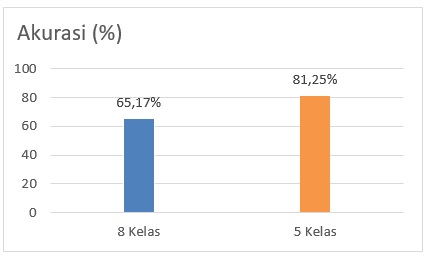
Kidung Dewa Yadnya is a sacred Balinese vocal art that plays a vital role in Hindu religious ceremonies. However, its existence faces serious challenges in the modern era. Globalization and the dominance of popular culture among the younger generation tend to shift their attention away from local music and traditions due to a preference for modern genres better known through digital media. This puts traditional culture at risk of declining interest and sustainability without appropriate documentation or revitalization strategies. Therefore, this study aims to develop a classification system for Kidung Dewa Yadnya using digital signal processing and artificial intelligence approaches. The Mel-Frequency Cepstral Coefficients (MFCC) method is used to extract acoustic characteristics from sound signals because of its ability to represent human auditory perception. The MFCC process includes pre-emphasis, framing, windowing, fast fourier transform, mel filter bank, discrete cosine-transform, and cepstral lifting stages. The extracted feature vectors are used as input for the K-Nearest Neighbor (KNN) algorithm for classification. The research data were obtained from voice recordings of Kidung Dewa Yadnya singers in .wav format. The test results showed the highest accuracy of 81.25% at k = 1 and k = 2, with an average accuracy above 78%. This value indicates that the combination of MFCC and KNN methods is effective in recognizing the acoustic patterns of kidung. This research is expected to support the preservation of Balinese culture through the digitization of kidung and serve as a basis for the development of an artificial intelligence-based traditional music classification system.
Downloads
References
[1] I. W. Suardiana, “Kesusastraan Bali Purwa,” Diakses Pada Tanggal, 2020, [Online]. Available: https://simdos.unud.ac.id/uploads/file_penunjang_dir/ca313409fa2d6d9a429b2b664cf4d6ca.pdf.
[2] Amri, “Komunikasi Dalam Menunjang Terwujudnya Makassar Sebagai ‘ Smart City ,’” J. Komun. KAREBA, vol. 5, no. 2, pp. 431–445, 2016.
[3] Z. D. Rusnalasari and U. N. Surabaya, “LPC,” no. 3, pp. 168–178, 2025.
[4] M. Hardiyanti and Y. Victor Rondonuwu, “Deteksi Suara Suling Sunda Menggunakan Metode Key-Nearest Neighbor,” Techno.Com, vol. 23, no. 2, pp. 338–349, 2024, doi: 10.62411/tc.v23i2.9817.
[5] F. Fadlila Surenggana, A. Aranta, and F. Bimantoro, “KLASIFIKASI MOOD MUSIK MENGGUNAKAN K-NEAREST NEIGHBOR DENGAN MEL FREQUENCY CEPSTRAL COEFFICIENTS (Mood Music Classification using K-Nearest Neighbor with Mel Frequency Cepstral Coefficients),” J. Teknol. Informasi, Komput. dan Apl., vol. 4, no. 2, pp. 263–276, 2023, [Online]. Available: http://jtika.if.unram.ac.id/index.php/JTIKA/.
[6] F. R. K. Andre Julio Sumurung Marbun, Heriyanto, “Implementation of Mel-Frequency Cepstral Coefficient as Feature Extraction Method On Speech Audio Data,” vol. 21, no. 3, pp. 260–270, 2024, doi: 10.31515/telematika.v21i3.12339.
[7] I. M. Ade Prayoga, G. Indrawan, and D. G. Hendra Divayana, “Pengelompokan Laras Suara Berdasarkan Pepatutan Atau Pathet Gamelan Bali Menggunakan Klasifikasi K-Nearest Neighbor Dan Support Vector Machine,” Technomedia J., vol. 8, no. 2SP, pp. 151–161, 2023, doi: 10.33050/tmj.v8i2sp.2011.
[8] F. D. Adhinata and N. G. Ramadhan, “Review: Metode-Metode Ekstraksi Ciri dan Klasifikasi Identifikasi Pembicara,” J. Media Inform. Budidarma, vol. 6, no. 1, p. 303, 2022, doi: 10.30865/mib.v6i1.3469.
[9] M. N. Rabbani, “Mel-Frequency Cepstral Coefficient ( MFCC ) Implementation of Voice Recognition Based Key Using Mel Frequency Cepstral Coefficient ( MFCC ),” vol. 3, no. 3, pp. 3998–4007, 2016.
[10] S. Y. Yehezkiel and Y. Suyanto, “Music Genre Identification Using SVM and MFCC Feature Extraction,” IJEIS (Indonesian J. Electron. Instrum. Syst., vol. 12, no. 2, p. 115, 2022, doi: 10.22146/ijeis.70898.
[11] A. Fajri Ryamizard, D. Bambang Hidayat, and S. SaidahST, “Deteksi Nada Tunggal Alat Musik Kecapi Bugis Makassar Menggunakan Metode Mel Frequency Cepstral Coefficient (Mfcc) Dan Klasifikasi K-Nearest Neighbour (Knn) Detection Single Tone of Bugis Makassar Music Instrument Using Mel Frequency Cepstral (Mfcc) Coeff,” vol. 5, no. 3, pp. 4715–4721, 2018.
[12] P. S. Informatika et al., “IMPLEMENTASI METODE MEL-FREQUENCY CEPSTRAL COEFFICIENT DAN,” vol. 5, no. 1, pp. 65–71, 2022.
[13] K. A. P. Kardiyasa and P. A. S. Santika, “Teknik Machine Learning dengan Metode SVM untuk Deteksi Anomali pada Kendala Jaringan FTTH,” Maj. Ilm. Teknol. Elektro, vol. 24, no. 1, pp. 71–78, 2025, doi: 10.24843/mite.205.v24i01.p07.
[14] D. M. S. Laksmi and I. W. Sudirana, “Kidung: Integral and Structured Parts in the Implementation of Balinese Hindu Religious ceremonies,” Malaysian J. Music, vol. 12, no. 2, pp. 18–34, 2023, doi: 10.37134//MJM.VOL12.2.2.2023.
[15] I. N. D. Putra and I. A. L. Sari, “Revitalisasi Tembang Teks Sastra Bali Tradisional dalam Ranah Ritual dan Digital,” Atavisme, vol. 22, no. 1, pp. 32–46, 2019, doi: 10.24257/atavisme.v22i1.541.32-46.
[16] R. A. N. Diaz, N. L. G. P. Suwirmayanti, and K. Budiarta, “Perbandingan Kualitas Pengenalan Suara Untuk Ekstraksi Fitur Menggunakan Mfcc Dan Spectral,” Naratif J. Nas. Riset, Apl. dan Tek. Inform., vol. 6, no. 1, pp. 58–63, 2024, doi: 10.53580/naratif.v6i1.281.
[17] A. R. Nurjannah, E. S. Maydiana, and P. Kasih, “Pengenalan Suara Dzikir Menggunakan Ekstraksi Fitur MFCC dan Support Vector Machine,” vol. 5, pp. 515–521, 2026.
[18] E. Rejaibi, A. Komaty, F. Meriaudeau, S. Agrebi, and A. Othmani, “MFCC-based Recurrent Neural Network for automatic clinical depression recognition and assessment from speech,” Biomed. Signal Process. Control, vol. 71, pp. 1–14, 2022, doi: 10.1016/j.bspc.2021.103107.
[19] Z. K. Abdul and A. K. Al-Talabani, “Mel Frequency Cepstral Coefficient and its Applications: A Review,” IEEE Access, vol. 10, no. October, pp. 122136–122158, 2022, doi: 10.1109/ACCESS.2022.3223444.
[20] L. Rahma, H. Syaputra, A. H. Mirza, and S. D. Purnamasari, “Objek Deteksi Makanan Khas Palembang Menggunakan Algoritma YOLO (You Only Look Once),” J. Nas. Ilmu Komput., vol. 2, no. 3, pp. 213–232, 2021, doi: 10.47747/jurnalnik.v2i3.534.
[21] H. Rafliansyah, B. Rahmat, and C. A. Putra, “Klasifikasi Suara Instrumen Musik Tiup Menggunakan Metode Convolutional Neural Network,” no. 4, 2024.
[22] P. A. T. Santosa, A. Andang, and F. M. S. Nursuwars, “Deteksi Adaptif Titik Kunci Sinyal Photoplethysmography (PPG) dengan Pemodelan Gradien untuk Identifikasi Pola Fisiologis,” Maj. Ilm. Teknol. Elektro, vol. 24, no. 1, pp. 51–60, 2025, doi: 10.24843/mite.205.v24i01.p05.
[23] I. H. Kusuma and N. Cahyono, “Analisis Sentimen Masyarakat Terhadap Penggunaan E-Commerce Menggunakan Algoritma K-Nearest Neighbor,” J. Inform. J. Pengemb. IT, vol. 8, no. 3, pp. 302–307, 2023, doi: 10.30591/jpit.v8i3.5734.
[24] A. N. Nan and D. Juniati, “Klasifikasi Jenis Jangkrik Berdasarkan Suara Menggunakan Dimensi Fraktal Metode Higuchi Dan K-Nearest Neighbor (Knn),” MATHunesa J. Ilm. Mat., vol. 10, no. 1, pp. 199–207, 2022, doi: 10.26740/mathunesa.v10n1.p199-207.
[25] I. G. Harsemadi, “Perbandingan Kinerja Algoritma K-NN dan SVM dalam Sistem Klasifikasi Genre Musik Gamelan Bali,” INFORMATICS Educ. Prof. J. Informatics, vol. 8, no. 1, p. 1, 2023, doi: 10.51211/itbi.v8i1.2417.
Downloads
Published
Issue
Section
License
Copyright (c) 2026 Prawira Adhisastra, Gede Sukadarmika , Fajar Purnama (Author)

This work is licensed under a Creative Commons Attribution 4.0 International License.
Jurnal MITE 1 (Majalah Ilmiah Teknologi Elektro) Universitas Udayana menggunakan lisensi akses terbuka Creative Commons Attribution 4.0 International (CC BY 4.0 International).